What is the aim of the Socratic dialectic? What method does it use to reach this aim?
The Socratic dialectic method (also known as the method of elenchus) encourages and involves the exploration of implications of conversational positions in order to promote and foster rational thought process/approach to the investigation of ethical concepts (Macquarie, 2008). Socratic dialectic method takes the form of a conversation in which a rigorous inquiry is conducted in order to investigate interlocutors’ claims to knowledge. Initial questioning probes enough to find out what the interlocutor’s pre-existing notions are. Further questioning reveals inconsistencies to the interlocutor. Some critics consider the applications of dialectic inquiry to be mostly negative, i.e. chiefly for the purposes of refutation; however the importance of critical reflection highlighted by the method and the desire to investigate which it instils in people cannot be underestimated, and arguably supersedes these concerns.
In the first part of the Socratic dialectic method --the analysis-- primary questioning identifies assumptions implied in the interlocutor’s personal beliefs about a given topic, by searching thoroughly for the commonly held assumptions and unchecked tacitly accepted facts that have the potential to influence one’s opinion on the subject. This interrogation to identify assumption and bias is vital as reasons justifying a position must be considered rationally (Macquarie, 2008); irrespective of tendencies towards traditional thinking, any urge to follow current thinking trends, or allow any conflict of interest to affect one’s responses.
Then the second part of the method is utilised, the synthesis (Macquarie, 2008). Synthesis is the process by which the dialectic questioner distils the interlocutor’s answers and compares the information therein to that gathered by the first definition put forward by the interlocutor, in order to expose inconsistencies, and --as much as possible-- leave no errors undetected. In the Socratic dialogues, further questioning often leads the interlocutor to put forward a position completely opposite to that which they started with, often leading to a confused and perplexed state known as aporia (Vasilis, 2006).
It is consistently found by Socrates that those with claims to knowledge and expertise lack the true wisdom that --according to Socrates-- the only path to true wisdom is by accepting that one knows nothing, since only the gods can possibly know the purpose of all things (Macquarie, 2008), their reason for being. It is also found that, while Socrates’ intentions are not to dictate one particular definition of virtue --i.e. the intended outcome isn’t necessarily simply to refute a point of view-- his inquiries are all conducted with the goal of attaining moral wisdom, self knowledge; exhorting that we should question even our most comfortable preconceived notions and beliefs in order to work towards achieving a state of ataraxia, thus freeing us to live the good life whilst continuing to inquire and examine. Those who pursue evil do so because they lack this self knowledge, according to Socrates, who believed that no-one commits evil intentionally (Macquarie University, 2008), and that gaining an awareness of self moves one closer to the aforementioned “good life”.
The Socratic dialectic method appears – on the face of it— to be for the most part a negative and one-sided method in its use in refuting false claims to knowledge, particularly as there appears to be no occasion in the dialogues in which Socrates is forced to change his mind instead. However, despite these criticisms, one can see that in convincing the interlocutor that he/she in fact knows nothing, Socrates has helped them to uncover errors in their own thinking where previously their assumptions would have led them to believe they were correct. As Socrates believed that since the truly wise consider themselves to “know only that they know nothing”, the only requirement for answering the dialectic questioning is pure common sense—no special knowledge or skills are needed in order to pursue a logical argument (Macquarie, 2008). So, ultimately, the Socratic dialectic method is a worthwhile action in the pursuit of truth, with the goal of increasing self-understanding. Socrates, as evidenced in the Apology (Tredennick, trans. 1969), considered this act to be his duty, asserting that a “life without examination is not worth living”.
References:
Tredennick, H. (1969) "The Apology of Socrates" (Plato) in The Last Days of Socrates p45-76
Macquarie University (2008) Phi130. Study notes weeks 2-4
Vasilis P. (2006). "Aporia and Searching in the Early Plato" in L. Judson and V. Karasmanis eds. Remembering Socrates. Oxford University Press.
-- copyright LHT 2008--
Friday, 10 October 2008

Thursday, 9 October 2008
Sea World - Gold Coast
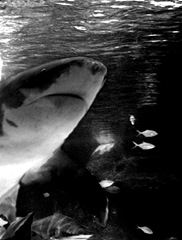 Excellent trip to Sea World.
Took loads of photos, will upload soon.
Afterwards we paid my inlaws a visit in Tugun and then spent what felt like 8 hours driving back to Brisbane.
More soon.
Friday, 3 October 2008
Supergrass @ The Tivoli, Brisbane
Fantastic Gig! nearly died in the pit but it was worth the crushed spine!
More soon.
More soon.
Monday, 15 September 2008
Coming up for air
I apologise in advance for any nonsensical errata in this post, my only excuse is that I'm frazzled, been working on getting the visa stuff together and its driving me crazy having to get it all signed and witnessed and stuff... especially whilst studying 4 units at once.
I'm doing well at uni so far, I'm going to take a break halfway through my degree though (12 out of 24 units), it's knackering. It's rare that I get a chance to come up for air these days.
For English we're studying Chaucer's duchess tale (arrrrrrrgh!) and Shakespeare's troilus & cressida (one of the problem plays....damn) and sleepy hollow which i'm really looking forward to(we have to incorporate the film adaptation into our analysis so it gives me an excuse to watch johnny depp again hehe).
For history we're studying ancient mythology, with some sociology mixed in (as it informs much of mythology, it seems). The classical mythology book is thicker than a whale omelette! (see blackadder 3)
For philosophy we're studying metaphysics, ancient and modern. ancient, we're studying Aristotle, Plato,Socrates(well, through Xenophon and Plato) etc. modern, we're studying Sartre and Heidegger and Russell (Bertrand Russell kicks arse!)
For politics we're studying international politics (having studied Australian politics last term) and there is a definite U.S bias.... I was pissed off that I had to pay 100 dollars for a biased piece of shit book but hey ho nobody says you have to agree with the readings, and if you support your criticisms with damning evidence then you get more marks than if you accepted it blindly and unquestioningly and didn't back up your position. I keep getting high distinctions for my discussion posts so either I'm doing something right or my tutors have incredibly low expectations of their students... Hrrm, I'll leave that topic there.
On a more positive note, I'm getting closer to my in laws and making more Australian friends through uni and mutual friends. Also, Elliot is coming over for Xmas, and me and Greg have invited all the family (including extended family and friends) over to our place for Xmas for the first time (its usually us that goes down the coast to visit them) so that should be nice.
Music, film prevent me from going crazy, and I try to keep doing my own creative stuff too (guitar, writing, graphic design, photography, jewellery) or I'd burst with stress. I use my lighting equipment and techniques I've learned for my photos now so my lighting background has come in useful after all.
I recently taught myself to knit and crochet (or I should say, retaught, I used to know when i was little but forgot most of it) and use the sewing machine to do little repairs mostly, though when i get more confident I'll try making clothes.
I'm considering starting my own secondhand bookshop, on eBay first and then if it gets popular enough I'll set up a personal website and then who knows, maybe even make enough to justify getting my own premises down the line...
It'd be a way to combine my passion for books and creative design abilities (such as they are :-s) with my research skills and photography skills....but, alas, i know nothing about business and I know its essential for me to learn about that stuff, so with a heavy heart I have promised myself to do at least a short course in business studies, either that or I'll befriend a business savvy person and 'pump them for answers'...as it were.
I'm seeing Supergrass in October and I cant wait, it's been so long!
For relieving tension, I read an interesting book when I can, and listen to music, but I also recommend making a pizza, as there's nothing like personifying dough as you're pummelling it. My current source of antagonism is Uwe Boll so it is a pleasure to punch him in the face.
Apologies for the length of this post, I lack the time to make it shorter.
Laura
I'm doing well at uni so far, I'm going to take a break halfway through my degree though (12 out of 24 units), it's knackering. It's rare that I get a chance to come up for air these days.
For English we're studying Chaucer's duchess tale (arrrrrrrgh!) and Shakespeare's troilus & cressida (one of the problem plays....damn) and sleepy hollow which i'm really looking forward to(we have to incorporate the film adaptation into our analysis so it gives me an excuse to watch johnny depp again hehe).
For history we're studying ancient mythology, with some sociology mixed in (as it informs much of mythology, it seems). The classical mythology book is thicker than a whale omelette! (see blackadder 3)
For philosophy we're studying metaphysics, ancient and modern. ancient, we're studying Aristotle, Plato,Socrates(well, through Xenophon and Plato) etc. modern, we're studying Sartre and Heidegger and Russell (Bertrand Russell kicks arse!)
For politics we're studying international politics (having studied Australian politics last term) and there is a definite U.S bias.... I was pissed off that I had to pay 100 dollars for a biased piece of shit book but hey ho nobody says you have to agree with the readings, and if you support your criticisms with damning evidence then you get more marks than if you accepted it blindly and unquestioningly and didn't back up your position. I keep getting high distinctions for my discussion posts so either I'm doing something right or my tutors have incredibly low expectations of their students... Hrrm, I'll leave that topic there.
On a more positive note, I'm getting closer to my in laws and making more Australian friends through uni and mutual friends. Also, Elliot is coming over for Xmas, and me and Greg have invited all the family (including extended family and friends) over to our place for Xmas for the first time (its usually us that goes down the coast to visit them) so that should be nice.
Music, film prevent me from going crazy, and I try to keep doing my own creative stuff too (guitar, writing, graphic design, photography, jewellery) or I'd burst with stress. I use my lighting equipment and techniques I've learned for my photos now so my lighting background has come in useful after all.
I recently taught myself to knit and crochet (or I should say, retaught, I used to know when i was little but forgot most of it) and use the sewing machine to do little repairs mostly, though when i get more confident I'll try making clothes.
I'm considering starting my own secondhand bookshop, on eBay first and then if it gets popular enough I'll set up a personal website and then who knows, maybe even make enough to justify getting my own premises down the line...
It'd be a way to combine my passion for books and creative design abilities (such as they are :-s) with my research skills and photography skills....but, alas, i know nothing about business and I know its essential for me to learn about that stuff, so with a heavy heart I have promised myself to do at least a short course in business studies, either that or I'll befriend a business savvy person and 'pump them for answers'...as it were.
I'm seeing Supergrass in October and I cant wait, it's been so long!
For relieving tension, I read an interesting book when I can, and listen to music, but I also recommend making a pizza, as there's nothing like personifying dough as you're pummelling it. My current source of antagonism is Uwe Boll so it is a pleasure to punch him in the face.
Apologies for the length of this post, I lack the time to make it shorter.
Laura
Tuesday, 19 August 2008
What is Insider Anti-Elitism, and how has this discourse and practice influenced political debate in Australia since 1996?
“Insider Anti-elitism”, a term related to populism, was coined to describe an opposition to the university educated intellectual elites (Sawer, 2004) by those in a position of power and wealth who-- in their refusal to be browbeaten by the so-called ‘politically correct‘ left-wing academics, activists and journalists-- actively foster distrust and suspicion of said elites in order to gain political advantage. Insider Anti-Elitism is so entrenched in Australian political discourse that it will persist for many years to come.
Populism cultivates and encourages suspicion of intellectuals and public institutions such as universities. Proponents of populist politics often justify their position by claiming said intellectuals to be “contemptuous of the values of ordinary people and of the national interest”(Sawer, 2004) and this claim is central to the populist strategies (Sawer, 2005).
Right-wing populism provides the core to New Right policies in Australia from 1996 onwards. Whilst its usage and effects are not exclusive to conservatism, it is primarily the domain of right-leaning parties, such as the One Nation party, and the Liberal Party, who widened their traditional support base (Ward, 2007) in an attempt to appeal to the common man, in order to win votes and cultivate long-term grass-roots support.
Though Anti-Elitism is by no means limited to the political right –for example, the Labor Party’s Mark Latham urged the party to free itself of the grip of the new class elites and “get back to the suburbs”(Sawer, 2004)—it is clear that the staunchly social conservative philosophy of the majority of the modern Liberal party supports the view that the right has “a natural advantage on the discursive terrain prepared by neo-conservatives”(Sawer, 2004).
The Liberal party’s ‘ageing and declining membership’ (Ward, 2007 p146) is likely to be the reason behind their widening of traditional support base (from businessmen and farmers) in order to appeal to the common man, who was considered to have previously been more inclined to vote Labor. Not only did the Liberal party claim to support the ‘aussie battlers’, but --akin to the tactics of many talk radio DJ’s with similar modus operandi-- presented themselves in a manner that implied that, in a way, they were battlers too: 'Is there anything in contemporary Australian life more outrageous than the sight of the most powerful figures of Australian conservatism cloaking their well-nourished frames in the rags of the powerless?' (Keating, 2001).
The populist discourse portrays the elites as condescending, and “untrustworthy and parasitic” in stark contrast to the “virtuous and long-suffering people”(Sawer, 2005). Johnson (2004) asserts that Anti-Elitism is “contradictory and open to challenge”. Paul Keating succinctly conveyed the hypocrisy of modern conservatism in his speech at the election campaign launch on February 14, 1996, when he attacked the Liberal party’s philosophy, which “preaches the values of families and communities, while conducting a direct assault on them through reduced wages and conditions and job security”.
The political right often uses the anti-elitist ploy in an attempt to woo the working class and win votes. The common procedure is to claim to speak for the common man, deride the authenticity of the ethics espoused by the so-called ‘bleeding hearts’, and cast aspersions as to the motives of those who hold opinions and concerns which differ from those of the typical ‘man in the street’. These tactics often work very well. Carole Johnson (Associate professor of Politics at the University of Adelaide) asserts that John Howard had “argued that the Keating Government favoured politically correct, elite, special interests over those of "mainstream" Australians”. Bulbeck, (2005) also speaking from a female academic perspective, recalls Johnson’s words, saying “it is ‘a very strange Australia’ when Pauline Hanson can claim that ‘the most downtrodden person in the country is the white Anglo-Saxon male’ [and] the Prime Minister can depict himself as ‘the victim of elite opinion”.
Any concerns over civil liberties, human rights and equal opportunity are dismissed as simply stemming from an elite agenda (Sawer, 2004). For example, anyone actively concerned with multiculturalism and minority rights were considered to be the ‘Moral middle class’, expressing such views not for altruistic reasons, but that they pursued such causes merely in order to further their own career, feather their own nests, and acquire higher incomes.
Anti-elitism is fuelled by widespread resentment towards ‘intellectuals’ who –rightly or wrongly—“consider themselves to be superior” (Bulbeck, 2004), and the perceived tendency of these elites to harangue “Ordinary Australians” on various ‘hot topics’, such as multiculturalism and environmental issues (Bulbeck, 2004). Sawer (2004) also states that: “To raise issues of public standards and public values is to be accused of trying to demonstrate superiority over ordinary Australians” So, in this regard, anti-elitist populism is reminiscent of ‘Tall Poppy Syndrome’ -- a term used to describe a levelling social attitude prevalent in several western countries -- in its attacks on what it considers to be the intellectual elites, drawing attention away from business elites (Sawer, 2004) who would stand to lose money if taxes were increased in order to subsidise the arts, education, and the welfare state. In light of this, this quote by Liberal Party’s John Howard in 1996 appears quite hypocritical: "If there’s one thing we need to get rid of in this country it is our tall poppy syndrome”.
It is believed by some (Bowring, 2007) that Anti-Elitism is on the wane. One could consider this view to be somewhat justified by some of the events of the past ten years. Notably the decline of Pauline Hanson’s One Nation party and indeed the Liberal party’s defeat at the last election suggest that the populist rhetoric is not enough to sustain grass-roots loyalty in light of changing attitudes. Also, I concur with the view that the public is becoming increasingly aware of the fact that such mistrust of those considered to be ‘elites’ is often hypocritical. This is especially true in this case, as the proponents are themselves part of the elite-- and the public are waking up to the fact that anti-elitist rhetoric intentionally masks the true source of injustices, which are allowed to perpetuate by those reluctant to appear supportive of the welfare state and other contentious social issues.
However, I believe that in future, Anti-Elitism will still be a prevalent force in political discourse and practice, as it appears very much ingrained into the attitudes of Australia’s society. It is very politically lucrative for governments-- it certainly served the Liberal Party’s needs in order to ‘divide and rule’. In support of this view, Bulbeck (2005) cites “Australia’s long history of anti-intellectualism, the dark underbelly of mateship and egalitarianism” as a source from which Anti-Elitism is derived. Sparrow (2008) maintains that: “There remains a huge social base for a revival of the Right’s popular ‘Anti-Elitism’. It is certain that growing cynicism, resentment, and voter apathy, not to mention the increased blurring of edges between the philosophies of political parties --and the camouflaging of their true intent-- will continue to provide plenty of opportunities for people in positions of power to use populist rhetoric in order to exploit the anti-elitist sentiment for political and financial advantage.
References
Bowring, P. 2007. “Tall Poppies Flourish Down Under”. International Herald Tribune, Feb 26.
URL: http://www.iht.com/articles/2007/02/26/opinion/edbowring.php (Accessed July 25th, 2008)
Bulbeck, C. 2005. “Speaking Truth to Power: Why Won't They Listen?”
TASA Conference Plenary Session – Professional Issues
Hobart 5-8 December 2005
URL: http://www.tasa.org.au/docs/TASAPlenaryChill%20Bulbeck.doc (Accessed July 25th, 2008)
Heywood, A. (2003) “Liberalism” in Political Ideologies: An Introduction. Basingstoke: Palgrave Macmillan. Pp. 25-68.
Johnson, Carole (2004). “Anti-elitist discourse in Australia: International influences and comparisons”, pp. 117-136 in Marian Sawer and Barry Hindess (eds) “Us and Them: Anti-Elitism in Australia”. Perth: API Network
Keating, P. (1996) Election campaign launch. February 14th 1996.
Keating, P. (2001) The Australian. April 2001.
Sawer, M. (2004) Australian Financial Review.
URL: http://polsc.anu.edu.au/Power_of_Us_and_Them1.htm (Accessed July 25th 2008)
Sawer, M. (2005) “How Mr Fat became Ms Bleeding Heart: Market Populism and the Future of the University.” The Journal for the Public University, Volume 2: 2005
URL: http://www.publicuni.org/jrnl/volume/2/journal_2_fat.html (accessed July 25th 2008)
Sawer, M & Barry Hindess (eds), (2004) “Us and Them: Anti-Elitism in Australia”, Bentley, API Network
Sparrow, Jeff. (2008). “Fancy dancers rule in Rudd's summit of the elites.” URL: http://www.crikey.com.au/Politics/20080407-Rudds-unashamedly-elitist-2020-Summit.html (Accessed July 25th 2008)
Ward, Ian. Randall G. Stewart. (2007) Politics One. 3rd ed. Palgrave. Australia.
-- copyright LHT 2008--
Populism cultivates and encourages suspicion of intellectuals and public institutions such as universities. Proponents of populist politics often justify their position by claiming said intellectuals to be “contemptuous of the values of ordinary people and of the national interest”(Sawer, 2004) and this claim is central to the populist strategies (Sawer, 2005).
Right-wing populism provides the core to New Right policies in Australia from 1996 onwards. Whilst its usage and effects are not exclusive to conservatism, it is primarily the domain of right-leaning parties, such as the One Nation party, and the Liberal Party, who widened their traditional support base (Ward, 2007) in an attempt to appeal to the common man, in order to win votes and cultivate long-term grass-roots support.
Though Anti-Elitism is by no means limited to the political right –for example, the Labor Party’s Mark Latham urged the party to free itself of the grip of the new class elites and “get back to the suburbs”(Sawer, 2004)—it is clear that the staunchly social conservative philosophy of the majority of the modern Liberal party supports the view that the right has “a natural advantage on the discursive terrain prepared by neo-conservatives”(Sawer, 2004).
The Liberal party’s ‘ageing and declining membership’ (Ward, 2007 p146) is likely to be the reason behind their widening of traditional support base (from businessmen and farmers) in order to appeal to the common man, who was considered to have previously been more inclined to vote Labor. Not only did the Liberal party claim to support the ‘aussie battlers’, but --akin to the tactics of many talk radio DJ’s with similar modus operandi-- presented themselves in a manner that implied that, in a way, they were battlers too: 'Is there anything in contemporary Australian life more outrageous than the sight of the most powerful figures of Australian conservatism cloaking their well-nourished frames in the rags of the powerless?' (Keating, 2001).
The populist discourse portrays the elites as condescending, and “untrustworthy and parasitic” in stark contrast to the “virtuous and long-suffering people”(Sawer, 2005). Johnson (2004) asserts that Anti-Elitism is “contradictory and open to challenge”. Paul Keating succinctly conveyed the hypocrisy of modern conservatism in his speech at the election campaign launch on February 14, 1996, when he attacked the Liberal party’s philosophy, which “preaches the values of families and communities, while conducting a direct assault on them through reduced wages and conditions and job security”.
The political right often uses the anti-elitist ploy in an attempt to woo the working class and win votes. The common procedure is to claim to speak for the common man, deride the authenticity of the ethics espoused by the so-called ‘bleeding hearts’, and cast aspersions as to the motives of those who hold opinions and concerns which differ from those of the typical ‘man in the street’. These tactics often work very well. Carole Johnson (Associate professor of Politics at the University of Adelaide) asserts that John Howard had “argued that the Keating Government favoured politically correct, elite, special interests over those of "mainstream" Australians”. Bulbeck, (2005) also speaking from a female academic perspective, recalls Johnson’s words, saying “it is ‘a very strange Australia’ when Pauline Hanson can claim that ‘the most downtrodden person in the country is the white Anglo-Saxon male’ [and] the Prime Minister can depict himself as ‘the victim of elite opinion”.
Any concerns over civil liberties, human rights and equal opportunity are dismissed as simply stemming from an elite agenda (Sawer, 2004). For example, anyone actively concerned with multiculturalism and minority rights were considered to be the ‘Moral middle class’, expressing such views not for altruistic reasons, but that they pursued such causes merely in order to further their own career, feather their own nests, and acquire higher incomes.
Anti-elitism is fuelled by widespread resentment towards ‘intellectuals’ who –rightly or wrongly—“consider themselves to be superior” (Bulbeck, 2004), and the perceived tendency of these elites to harangue “Ordinary Australians” on various ‘hot topics’, such as multiculturalism and environmental issues (Bulbeck, 2004). Sawer (2004) also states that: “To raise issues of public standards and public values is to be accused of trying to demonstrate superiority over ordinary Australians” So, in this regard, anti-elitist populism is reminiscent of ‘Tall Poppy Syndrome’ -- a term used to describe a levelling social attitude prevalent in several western countries -- in its attacks on what it considers to be the intellectual elites, drawing attention away from business elites (Sawer, 2004) who would stand to lose money if taxes were increased in order to subsidise the arts, education, and the welfare state. In light of this, this quote by Liberal Party’s John Howard in 1996 appears quite hypocritical: "If there’s one thing we need to get rid of in this country it is our tall poppy syndrome”.
It is believed by some (Bowring, 2007) that Anti-Elitism is on the wane. One could consider this view to be somewhat justified by some of the events of the past ten years. Notably the decline of Pauline Hanson’s One Nation party and indeed the Liberal party’s defeat at the last election suggest that the populist rhetoric is not enough to sustain grass-roots loyalty in light of changing attitudes. Also, I concur with the view that the public is becoming increasingly aware of the fact that such mistrust of those considered to be ‘elites’ is often hypocritical. This is especially true in this case, as the proponents are themselves part of the elite-- and the public are waking up to the fact that anti-elitist rhetoric intentionally masks the true source of injustices, which are allowed to perpetuate by those reluctant to appear supportive of the welfare state and other contentious social issues.
However, I believe that in future, Anti-Elitism will still be a prevalent force in political discourse and practice, as it appears very much ingrained into the attitudes of Australia’s society. It is very politically lucrative for governments-- it certainly served the Liberal Party’s needs in order to ‘divide and rule’. In support of this view, Bulbeck (2005) cites “Australia’s long history of anti-intellectualism, the dark underbelly of mateship and egalitarianism” as a source from which Anti-Elitism is derived. Sparrow (2008) maintains that: “There remains a huge social base for a revival of the Right’s popular ‘Anti-Elitism’. It is certain that growing cynicism, resentment, and voter apathy, not to mention the increased blurring of edges between the philosophies of political parties --and the camouflaging of their true intent-- will continue to provide plenty of opportunities for people in positions of power to use populist rhetoric in order to exploit the anti-elitist sentiment for political and financial advantage.
References
Bowring, P. 2007. “Tall Poppies Flourish Down Under”. International Herald Tribune, Feb 26.
URL: http://www.iht.com/articles/2007/02/26/opinion/edbowring.php (Accessed July 25th, 2008)
Bulbeck, C. 2005. “Speaking Truth to Power: Why Won't They Listen?”
TASA Conference Plenary Session – Professional Issues
Hobart 5-8 December 2005
URL: http://www.tasa.org.au/docs/TASAPlenaryChill%20Bulbeck.doc (Accessed July 25th, 2008)
Heywood, A. (2003) “Liberalism” in Political Ideologies: An Introduction. Basingstoke: Palgrave Macmillan. Pp. 25-68.
Johnson, Carole (2004). “Anti-elitist discourse in Australia: International influences and comparisons”, pp. 117-136 in Marian Sawer and Barry Hindess (eds) “Us and Them: Anti-Elitism in Australia”. Perth: API Network
Keating, P. (1996) Election campaign launch. February 14th 1996.
Keating, P. (2001) The Australian. April 2001.
Sawer, M. (2004) Australian Financial Review.
URL: http://polsc.anu.edu.au/Power_of_Us_and_Them1.htm (Accessed July 25th 2008)
Sawer, M. (2005) “How Mr Fat became Ms Bleeding Heart: Market Populism and the Future of the University.” The Journal for the Public University, Volume 2: 2005
URL: http://www.publicuni.org/jrnl/volume/2/journal_2_fat.html (accessed July 25th 2008)
Sawer, M & Barry Hindess (eds), (2004) “Us and Them: Anti-Elitism in Australia”, Bentley, API Network
Sparrow, Jeff. (2008). “Fancy dancers rule in Rudd's summit of the elites.” URL: http://www.crikey.com.au/Politics/20080407-Rudds-unashamedly-elitist-2020-Summit.html (Accessed July 25th 2008)
Ward, Ian. Randall G. Stewart. (2007) Politics One. 3rd ed. Palgrave. Australia.
-- copyright LHT 2008--
Monday, 18 August 2008
Study Period 3 2008
Starting 1st September.
PLT120 - Introduction to Global Politics
PHI130 - Mind, Meaning, and Metaphysics
ENG110 - Introduction to English Literature
HST140 - The Making of Australia
PLT120 - Introduction to Global Politics
PHI130 - Mind, Meaning, and Metaphysics
ENG110 - Introduction to English Literature
HST140 - The Making of Australia
Saturday, 2 August 2008
This week, I have been mostly listening to: David Bowie
I recommend the best of David Bowie double cd, it is excellent:
*Particular favourites
CD1
01 - Space Oddity
02 - Changes
03 - Starman*
04 - Ziggy Stardust
05 - Suffragette City
06 - John, I'm Only Dancing
07 - The Jean Genie
08 - Drive in Saturday
09 - Life on Mars*
10 - Sorrow
11 - Rebel Rebel*
12 - Rock & Roll Suicide
13 - Diamond Dogs
14 - Knock on Wood
15 - Young Americans*
16 - Fame
17 - Golden Years*
18 - TVC 15*
19 - Sound & Vision*
CD2
01 - Heroes*
02 - Beauty & the beast*
03 - Boys keep swinging*
04 - D.J.*
05 - Alabama song
06 - Ashes to ashes*
07 - Fashion
08 - Scary monsters (and super creeps)*
09 - Under pressure (with Queen)*
10 - Wild is the wind*
11 - Let's dance*
12 - China girl
13 - Modern love
14 - Blue jean
15 - This is not America (with Pat Metheny)
16 - Dancing in the street (with Mick Jagger)
17 - Absolute beginners
18 - Day in day out
*Particular favourites
CD1
01 - Space Oddity
02 - Changes
03 - Starman*
04 - Ziggy Stardust
05 - Suffragette City
06 - John, I'm Only Dancing
07 - The Jean Genie
08 - Drive in Saturday
09 - Life on Mars*
10 - Sorrow
11 - Rebel Rebel*
12 - Rock & Roll Suicide
13 - Diamond Dogs
14 - Knock on Wood
15 - Young Americans*
16 - Fame
17 - Golden Years*
18 - TVC 15*
19 - Sound & Vision*
CD2
01 - Heroes*
02 - Beauty & the beast*
03 - Boys keep swinging*
04 - D.J.*
05 - Alabama song
06 - Ashes to ashes*
07 - Fashion
08 - Scary monsters (and super creeps)*
09 - Under pressure (with Queen)*
10 - Wild is the wind*
11 - Let's dance*
12 - China girl
13 - Modern love
14 - Blue jean
15 - This is not America (with Pat Metheny)
16 - Dancing in the street (with Mick Jagger)
17 - Absolute beginners
18 - Day in day out
Huzzar
My favourite band, Supergrass, who recently toured the U.S. with the Foo Fighters, are coming to Brisbane on 2nd October. Excellent opportunity to take a break from studying! Haven't seen them live in so long....expect photos.
http://www.strangeones.co.uk/tour/index.htm
http://www.strangeones.co.uk/tour/index.htm
Wednesday, 30 July 2008

Tuesday, 29 July 2008



Monday, 28 July 2008


Saturday, 26 July 2008
Creatively Bereft

Currently having trouble expressing myself creatively.
I am Studying alone. I have a Uni-mode On/Off button over which it seems I have little control-- Practically the only things I write now are essays and notes for upcoming essays. My guitar, pencils, charcoals and jewellery-making tools lie gathering dust. My camera rarely sees daylight any more -- the recent photography trip was a total bust -- and I'm feeling despondent.
I try to incorporate a mixture of creative and functional activities into my day, in order to provide the requisite variety that I know I need to keep sane and reasonably sanguine. However, the reasons for doing so seem to appear less convincing as I get older and stupider and more depressed... It all begins to look like I'm devising more elaborate ways of distracting myself.
I often get prolonged blank moments that worry me and general thoughtlessness for which I chastise myself, perhaps pointlessly. I also find myself withdrawing from life in general.
You know, when I started this post I was pretty sure it was going to go somewhere... once I'd worked up some steam perhaps...seems all I can muster today are self-absorbed maudlin ramblings. Perhaps tomorrow lightning will strike my poor addled brain.This Week I have been mostly Listening to: Classical Music
- Albinoni - Adagio
- Anonymous - romance for guitar jeux interdits
- Bach - Air On The G-String From Suite No.13 in D Major
- Bach - Prelude and Fugue in D minor, BWV554
- Bach - Minuet and Badinerie (from Orchestral Suite No. 2 in B Minor)
- Bach - Toccata in D minor
- Barber - Adagio
- Beethoven - Minuet in G
- Beethoven - 'Moonlight' Sonata
- Beethoven - piano concerto no. 1 in c major op. 15 2 largo
- Beethoven - Fur Elise
- Bizet - Entr'acte To Act III (Carmen)
- Boccherini - Minuet
- Boccherini - quintet no. 7 in e minor for guitar and strings g 451 4 allegretto
- Borodin - Nocturne
- Bruch - Violin Concerto No 1 in G minor Op.26
- Chopin - waltzes op. 69 nr. 9 in a flat major op. 69 1 valse de la dieu
- Dallabaco - concerto dachiesa op.2 no. 4 1 aria allegro moderato
- Debussy - Clair De Lune
- Debussy - Les sons et les parfums tournent dans l'air du soir
- Debussy - Preludes, Des pas sur la neige
- Delibes - Flower Duet (Lakmé)
- Delibes - Pizzicati From The Ballet Sylvia
- Dvorak - String Serenade in E major Op.22, Moderato
- Elgar - Nimrod
- Faure - Pavane
- Gershwin - Summertime
- Gounod - Faust (margarethe)-ballet music 5 moderato con moto
- Grieg - Peer Gynt - suite no. 1 op. 46 morning
- Handel - Arrival of the Queen of Sheba (from 'Solomon')
- Handel - Concerto grosso in A minor op. 6 No. 4
- Holst - Mars, the Bringer of War - New York Philharmonic
- Holst - Venus, the Bringer of Peace - NYP
- Holst - Mercury, the Winged Messenger - NYP
- Holst - Jupiter, the Bringer of Jollity - NYP
- Holst - Saturn, the Bringer of Old Age - NYP
- Holst - Uranus, the Magician - NYP
- Holst - Neptune, the Mystic - NYP
- Listz - Lieberstraum No. 3 in A flat major, G 541
- Liszt - Hungarian Rhapsody No.2
- Liszt - Les Preludes
- Liszt - Liebestraum No.3 in A flat
- Mascagni - Intermezzo (Cavalleria Rusticana)
- Massenet - Méditation (Thaïs)
- Mozart - Piano Concerto No. 21 in C, 2nd movement ('Elvira Madigan')
- Mozart - Rondo a' la Turc K331, No 3
- Mozart - Rondo Alla Turca, from Piano Sonata in A
- Mozart - The Magic Flute - Overture
- Mozart- Symphony No. 40, 1st movement
- Mozart - Violin Concerto No. 5 in A, 2nd Movement
- Offenbach - Barcarolle, from 'The Tales of Hoffmann'
- Pachalbel - Canon in D
- Puccini - Madame Butterfly, Un Bel Di, (arranged for strings)
- Puccini - O Mio Babbino Caro (Gianni Schicchi)
- Rachmaninov - Piano Concerto No.2
- Rachmaninov - Rhapsody On A Theme Of Paganini
- Rachmaninov - Vocalise Op 34 No. 14
- Rossini - Overture - The Barber of Seville
- Rossini - The Barber Of Seville - Overture
- Saint-Saens - Aquarium From The Carnival Of Animals
- Saint-saens - Danse macabre
- Saint-Saens - The Swan From The Carnival Of Animals
- Satie - Gymnopédie No.1
- Schubert - Ave Maria
- Sibelius - Rakastava
- Tchaikovsky - Swan Lake Suite Scene No.1
- Vaughan Williams - Fantasia on a theme of Thomas Tallis
- Vaughn Williams - Fantasia On 'Greensleeves'
- Verdi - La Traviata - Prelude to Act 1
- Vivaldi - Allegro from Spring - The Four Seasons
- Vivaldi - Flute Concerto in G minor 'La Notte', VI. Allegro
- Vivaldi - Mandolin Concerto in C, RV 425
Wednesday, 23 July 2008
Photography Trip - Gympie - 2

Bit of a washout due to shitty weather but some photos and text coming soon.
Next part:
previous part:
Monday, 21 July 2008
Analysis of “The World is Flat” by Thomas Friedman.

In accordance with Glenn Fisher’s opinion that “Those from modern societies tend to place more stock in technical competence and qualifications, (1979 p. 25), Friedman believes that young people should be more inspired to be scientists, engineers etc. eschewing the more creative liberal arts subjects (as favoured by US colleges) for more economically profitable careers in the hard sciences (Johnson, 2005. p69,71).
Though my interests and qualifications span both liberal and technical subjects, I disagree that arts subjects should be de-emphasised. My library work related to the provision of multicultural resources for schools and education professionals, in addition to usual library duties I developed and designed language survival kits. It was very satisfying work as it enabled me to be creative, and work closely with the community, helping communications between teachers and students with first languages other than English. Some of my co-workers (translators) were refugees from war-torn countries, and it was fascinating to hear their stories, what they endured, how they managed to find work, and their aspirations.
I agree with Friedman on the importance of technological innovation. Advancements in speed, efficiency and availability of technology and communications since the late 20th century (Johnson, J. 2005 p69) facilitate global trading and communication, and increase competition. “The speed at which ideas are passed between people determines the rate of progress” (Leamer, 2006 p29) Expansion can have far-reaching negative consequences however, and here is where my beliefs conflict with Friedman’s. Writing from a predominantly western perspective extolling the benefits of business outsourcing, Friedman fills his book with anecdotes and selective statistics (Johnson. J. p70); failing to consider that the incentives of low costs (Varadarajan, S. 2005) and high availability of labour leads companies based in developed nations to outsource their labour to countries with comparatively lax attitudes towards workers rights; forcing people to work in unsafe conditions and for longer hours. “(few) americans felt the force of competition for their job from India or china…(many) companies were interested or engaged in moving jobs to India or china” (Leamer, 2006 p. 42). Such companies often do little to discourage or make a stand against the inequities and injustices that exist, widening the gap between skilled and unskilled workers. (Leamer, 2006 p. 11) puts it succinctly: “financial rewards relentlessly bend the system to their will”.
Despite these issues, I am in agreement with Friedman in my position that a large and diverse skillset is essential for survival (p88) to be adaptable to change (Field,1996), increasing employability. Those who “Fail to navigate the rapid changes”(Friedman, p88) or work to the demands of the flat world (Johnson, J. 2005 p69) will potentially be left behind.
Bibliography
Fisher, Glenn. 1980. “International Negotiation: A cross-cultural perspective.” Intercultural Press Inc. Maine, U.S.A
Fisher, Glenn. 1979 “Communications in a global society” Norwood, New Jersey. Ablex.
Friedman, Thomas. 2005. “The World is Flat: A Brief History of The 21st Century.” New York. Farrar, Strauss, and Giroux.
Field, Laurie.1996. “Skilling Australia”. Melbourne, Australia. Longman Australia Pty Ltd.
Johnson, J. 2006. “Mind The Gap.” Knowledge Quest, 35(2) p68-72.
Leamer, Edward E. 2006. “A Flat World, a level playing field, a small world after all, or none of the above? Review of Thomas L Friedman’s ‘The World Is Flat’” http://www.uclaforecast.com/reviews/leamer_flatworld_060221.pdf (accessed july 1st 2008)
Varadarajan, Siddarth. 2005. “But The World’s Still Round”. The Hindu. http://www.hindu.com/br/2005/08/02/stories/2005080200381500.htm (accessed 1st july 2008)
Careers and Personality tests...
I recently took one of those self-directed vocational suitability/personality test type questionnaires as part of my uni course.
You answer various questions involving self-evaluation of ability and various other factors. Each question is categorised and affirmative answers are tallied to scores in each category. The top 3 scores in each category become the three traits describing your personality and career suitability. the initial of each category forms part of a 3 character code. The letters in the code are prioritised so that the first letter is strongest, the second is second strongest etc. You are given a booklet detailing various career summaries and you can look up related careers suitable to your personality 'type' and skillset, and identify areas for improvement necessary for success should you decide to go for a career unrelated to your code.
I scored highly in the Artistic, Investigative, and Social codes, surprisingly.
The career/personality types in which I did not score highly in terms of suitability and general ability) were Conventional, Realistic, and Enterprising.
My summary code was AIS (Artistic, Investigative, Social) which confirmed what I already knew about my personality, and yet upon coding my occupational aspiration history I found a pattern that provided some new insight into why I made such a drastic career aspiration change recently:
My Code began with ISA (Forensic Psychologist)
then ARI (Sound engineer), then went gradually towards the complete reverse priority, AIS (Lighting Designer) Writer (ASI), and (Illustrator)(AIS).
Initially, from my results it appeared clear to me now why I no longer felt happy with the technical aspects of theatre in recent years: I longed for a position that was more creative artistically, it was the 'realistic' aspects of technical theatre that I didn’t truly enjoy and didnt come naturally to me.
Even though I enjoy working with technical equipment, learning new techniques and training others, I realise it was mainly the creative and problem-solving aspects of the job that attracted me in the first place.
I realised that I’d be more suited to illustrating and writing for a living, ambitions I have held since I was a young child, though admittedly they were often set aside for wildly divergent career choices to varying degrees of success.
Superficially, I found this survey to be somewhat useful, providing the validation I needed that my change was for the best, and I feel more positive about my future now that I have the information gleaned from the SDS and the career research report.
However, the usefulness of surveys of this sort have the potential to be compromised by confirmation bias, (See Forer, Beyerstein, etc) not to mention the similarly common self-serving bias and the dunning-kruger effect.
Awareness of the processes behind a self serving bias can help you to evaluate your performance and progress more critically, and it will allow you to use things like failures as learning experiences. (Smith, S. 2008)
I find this stuff fascinating, especially the implications for possible sources of bias in forensic psychological evaluation, one of my previous occupational interests.
Such awareness is useful for exercising critical thinking-- a valuable skill-- for university, most careers, and --of course-- life.
My apologies... I have made this post longer than usual because as Pascal said, I lack the time to make it shorter.
Laura
Pertinent Readings:
Holland, J. L (2006) Self - Directed Search:
Assessment Booklet. Macquarie University
Smith, S. 2008 http://www.wisegeek.com/
Forer, B. R. (1949). "The fallacy of personal validation: A classroom demonstration of gullibility". Journal of Abnormal and Social Psychology 44: 118–123.
Dickson, D. H.; Kelly, I. W. (1985). "The 'Barnum Effect' in Personality Assessment: A Review of the Literature". Psychological Reports 57: 367–382.
Justin Kruger; David Dunning (1999). "Unskilled and Unaware of It: How Difficulties in Recognizing One's Own Incompetence Lead to Inflated Self-Assessments". Journal of Personality and Social Psychology 77 (6): 1121–34.
http://www.apa.org/journals/features/psp7761121.pdf
Katherine A. Burson; Richard P. Larrick; Joshua Klayman;YUTAO (2006). "Skilled or Unskilled, but Still Unaware of It: How Perceptions of Difficulty Drive Miscalibration in Relative Comparisons". Journal of Personality and Social Psychology 90 (1): 60–77.
http://faculty.fuqua.duke.edu/~larrick/bio/Files/2006%20Burson%20Larrick%20Klayman%20JPSP.pdf
Joyce Ehrlinger; David Dunning (January 2003). "How Chronic Self-Views Influence (and Potentially Mislead) Estimates of Performance". Journal of Personality and Social Psychology 84 (1): 5–17. American Psychological Association
http://psycnet.apa.org/?fa=main.doiLanding&doi=10.1037/0022-3514.84.1.5
You answer various questions involving self-evaluation of ability and various other factors. Each question is categorised and affirmative answers are tallied to scores in each category. The top 3 scores in each category become the three traits describing your personality and career suitability. the initial of each category forms part of a 3 character code. The letters in the code are prioritised so that the first letter is strongest, the second is second strongest etc. You are given a booklet detailing various career summaries and you can look up related careers suitable to your personality 'type' and skillset, and identify areas for improvement necessary for success should you decide to go for a career unrelated to your code.
I scored highly in the Artistic, Investigative, and Social codes, surprisingly.
The career/personality types in which I did not score highly in terms of suitability and general ability) were Conventional, Realistic, and Enterprising.
My summary code was AIS (Artistic, Investigative, Social) which confirmed what I already knew about my personality, and yet upon coding my occupational aspiration history I found a pattern that provided some new insight into why I made such a drastic career aspiration change recently:
My Code began with ISA (Forensic Psychologist)
then ARI (Sound engineer), then went gradually towards the complete reverse priority, AIS (Lighting Designer) Writer (ASI), and (Illustrator)(AIS).
Initially, from my results it appeared clear to me now why I no longer felt happy with the technical aspects of theatre in recent years: I longed for a position that was more creative artistically, it was the 'realistic' aspects of technical theatre that I didn’t truly enjoy and didnt come naturally to me.
Even though I enjoy working with technical equipment, learning new techniques and training others, I realise it was mainly the creative and problem-solving aspects of the job that attracted me in the first place.
I realised that I’d be more suited to illustrating and writing for a living, ambitions I have held since I was a young child, though admittedly they were often set aside for wildly divergent career choices to varying degrees of success.
Superficially, I found this survey to be somewhat useful, providing the validation I needed that my change was for the best, and I feel more positive about my future now that I have the information gleaned from the SDS and the career research report.
However, the usefulness of surveys of this sort have the potential to be compromised by confirmation bias, (See Forer, Beyerstein, etc) not to mention the similarly common self-serving bias and the dunning-kruger effect.
Awareness of the processes behind a self serving bias can help you to evaluate your performance and progress more critically, and it will allow you to use things like failures as learning experiences. (Smith, S. 2008)
I find this stuff fascinating, especially the implications for possible sources of bias in forensic psychological evaluation, one of my previous occupational interests.
Such awareness is useful for exercising critical thinking-- a valuable skill-- for university, most careers, and --of course-- life.
My apologies... I have made this post longer than usual because as Pascal said, I lack the time to make it shorter.
Laura
Pertinent Readings:
Holland, J. L (2006) Self - Directed Search:
Assessment Booklet. Macquarie University
Smith, S. 2008 http://www.wisegeek.com/
Forer, B. R. (1949). "The fallacy of personal validation: A classroom demonstration of gullibility". Journal of Abnormal and Social Psychology 44: 118–123.
Dickson, D. H.; Kelly, I. W. (1985). "The 'Barnum Effect' in Personality Assessment: A Review of the Literature". Psychological Reports 57: 367–382.
Justin Kruger; David Dunning (1999). "Unskilled and Unaware of It: How Difficulties in Recognizing One's Own Incompetence Lead to Inflated Self-Assessments". Journal of Personality and Social Psychology 77 (6): 1121–34.
http://www.apa.org/journals/features/psp7761121.pdf
Katherine A. Burson; Richard P. Larrick; Joshua Klayman;YUTAO (2006). "Skilled or Unskilled, but Still Unaware of It: How Perceptions of Difficulty Drive Miscalibration in Relative Comparisons". Journal of Personality and Social Psychology 90 (1): 60–77.
http://faculty.fuqua.duke.edu/~larrick/bio/Files/2006%20Burson%20Larrick%20Klayman%20JPSP.pdf
Joyce Ehrlinger; David Dunning (January 2003). "How Chronic Self-Views Influence (and Potentially Mislead) Estimates of Performance". Journal of Personality and Social Psychology 84 (1): 5–17. American Psychological Association
http://psycnet.apa.org/?fa=main.doiLanding&doi=10.1037/0022-3514.84.1.5
Tuesday, 15 July 2008
Photography trip - Gympie - 1
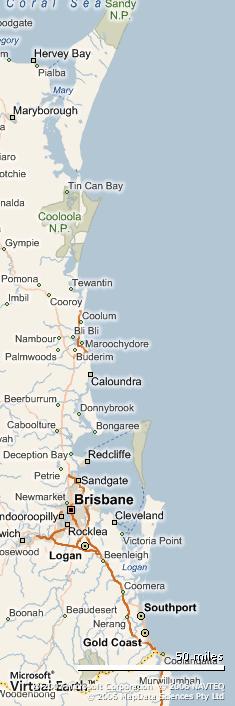
Going to Gympie on 23rd.
It's an old gold mining town, lots of interesting history.
Should be useful for my upcoming history unit on 'the making of australia'.
Considering visiting Amamoor state forest, might see a platypus!
Anyway, expect photos soon.
L
Next post:
Wednesday, 9 July 2008
SP1 Results

For Study Period 1, I got 3 credits (for units ssk12, ssk13, phi120).
I'm pleased, not bad for my first ever term at uni.... prior to which I thought I would fail miserably.
Let's see how I get on with History and Politics in Study Period 2!
In Study Period 3 (September 1st onwards) I'll be studying Global Politics, Shakespeare, Metaphysics and Classical Mythology next, should be a larf!
L
Wednesday, 2 July 2008
Regarding gender and race issues....
Regarding gender and race issues.... well, like with most of what we've been discussing at uni, things are far from being perfect but in some ways they are so much better than they were. Bit of a weak statement but basically there's a long way to go yet.
It's actually easy for many of us to take what we have for granted... I've caught myself doing it at times, I'll admit, though learning history helps get a bit of perspective.
It seems to be human nature to quickly become acclimatised to a certain level of comfort....standards of living, benefits and rights etc. I guess the further removed we are from the actual struggles that won us these rights, freedoms, etc. the easier it is to become blasé.
It's why a proper understanding and appreciation of history and politics is vital, in order to know enough to recognise the warning signs... to avoid repeating the mistakes of the past.
One important thing that helps prevent me from getting too complacent is questioning even the most comfortable concepts. Too many people acquiesce unquestioningly and stay quiet rather than make a fuss which allows injustices to continue and proliferate.
Sorry, rambled a bit. hope i've made some sense...there was a point or two in there but they got lost. :-D
I shall finish on a quote:
"The whole problem with the world is that fools and fanatics are always so sure of themselves, and wiser people so full of doubts" - Bertrand Russell, attr.
It's actually easy for many of us to take what we have for granted... I've caught myself doing it at times, I'll admit, though learning history helps get a bit of perspective.
It seems to be human nature to quickly become acclimatised to a certain level of comfort....standards of living, benefits and rights etc. I guess the further removed we are from the actual struggles that won us these rights, freedoms, etc. the easier it is to become blasé.
It's why a proper understanding and appreciation of history and politics is vital, in order to know enough to recognise the warning signs... to avoid repeating the mistakes of the past.
One important thing that helps prevent me from getting too complacent is questioning even the most comfortable concepts. Too many people acquiesce unquestioningly and stay quiet rather than make a fuss which allows injustices to continue and proliferate.
Sorry, rambled a bit. hope i've made some sense...there was a point or two in there but they got lost. :-D
I shall finish on a quote:
"The whole problem with the world is that fools and fanatics are always so sure of themselves, and wiser people so full of doubts" - Bertrand Russell, attr.
Whatever comes next....
I've been here 3 years now, living in the sunshine state (Queensland) waiting to get my permanent residency and then I'll see about citizenship. Dual hopefully! I still think of myself as a Brit. And yes, my brummie accent has softened somewhat but still pops up in conversation when certain words are used.
I miss everyone, especially christmases where you all get together. Christmas here in Australia is kinda weird. It's really hot, for one thing, and I have a whole set of Aussie inlaws, for another. :-)
I do intend to visit the UK, but can't just yet for 3 reasons:
1. I have to remain in australia until the decision on my permanent residency visa is made.
2. I'm in the middle of a degree in History and Political Science at Macquarie University (it's in Sydney) I'm hoping to finish within two years.
3. Due to the above reasons, (especially exorbitant visa 'application fees') money is too tight. We're saving though so once I get enough money and get dual citizenship I'll be over to visit.
It's not hard to get citizenship, theres a 95% pass rate first time, but in the unlikely event you fail, you can retake it for free as many times as it takes to pass it! Unfortunately the same isn't true of University studies. I have to pay $805 per unit (24 units=1 BA in History&Political Science) as I am not entitled to a loan or any help whatsoever with fees (not a citizen) which is fine, I dont want to have a debt to the commonwealth. And at least by paying as I go, I will graduate debt free!
If you want to see what I'm up to , where i've been in australia and the photos i've taken, check out the archives. I'm slowly backdating this blog to the time I arrived in australia.... I've taken thousands of pics over 3 years and what with study commitments and life stuff getting in the way, it takes alot of time to cull and sort them and choose the least bad ones for the blog.
I'm hoping to take an art degree after this one, but not before taking a long trip all round australia and new zealand to get some inspiration.
I miss everyone, especially christmases where you all get together. Christmas here in Australia is kinda weird. It's really hot, for one thing, and I have a whole set of Aussie inlaws, for another. :-)
I do intend to visit the UK, but can't just yet for 3 reasons:
1. I have to remain in australia until the decision on my permanent residency visa is made.
2. I'm in the middle of a degree in History and Political Science at Macquarie University (it's in Sydney) I'm hoping to finish within two years.
3. Due to the above reasons, (especially exorbitant visa 'application fees') money is too tight. We're saving though so once I get enough money and get dual citizenship I'll be over to visit.
It's not hard to get citizenship, theres a 95% pass rate first time, but in the unlikely event you fail, you can retake it for free as many times as it takes to pass it! Unfortunately the same isn't true of University studies. I have to pay $805 per unit (24 units=1 BA in History&Political Science) as I am not entitled to a loan or any help whatsoever with fees (not a citizen) which is fine, I dont want to have a debt to the commonwealth. And at least by paying as I go, I will graduate debt free!
If you want to see what I'm up to , where i've been in australia and the photos i've taken, check out the archives. I'm slowly backdating this blog to the time I arrived in australia.... I've taken thousands of pics over 3 years and what with study commitments and life stuff getting in the way, it takes alot of time to cull and sort them and choose the least bad ones for the blog.
I'm hoping to take an art degree after this one, but not before taking a long trip all round australia and new zealand to get some inspiration.
Tuesday, 1 July 2008
Sewing
Recently bought my first sewing machine, a Singer.
Going to use it for repairs mainly. Who knows, maybe I'll get good enough to try making clothes or something!
Going to use it for repairs mainly. Who knows, maybe I'll get good enough to try making clothes or something!
Monday, 23 June 2008
Another Dead Comedy Legend...
George Carlin, dead at 71, Heart failure.
Quotes
"Death is caused by swallowing small amounts of saliva over a long period of time."
"Ever notice that anyone going slower than you is an idiot, but anyone going faster is a maniac?"
"The very existence of flamethrowers proves that sometime, somewhere, someone said to themselves, “You know, I want to set those people over there on fire, but I’m just not close enough to get the job done.”
"No one knows what’s next, but everybody does it."
"Give a man a fish and he will eat for a day. Teach him how to fish, and he will sit in a boat and drink beer all day."
"I'm the ice box man at our house. I'm Ice Box Man! I answer the call when there's a need at the ice box. Two very important responsibilities, the first one is: keeping people from standing with the door to the refrigerator open for more than 45 minutes at a time. God, that gets me mad - "YOU WANT TO CLOSE THAT GODDAMN DOOR PLEASE? YOU WANT TO CLOSE THE DOOR?! YOU'RE LETTING OUT ALL OF THE COLDNESS I SAVED OVERNIGHT! COME ON, CLOSE THE DOOR!" - you know, some guy smoked eight joints and he's gonna inventory my refrigerator. "Ummmm...Ummm...Uhhh.... "Here, here's fifty dollars- go down to the Burger King. Willya, God! We'll save more than that on electricity alone. Close the goddamn door, willya?"
Look, if you wanna know what's in there, why don't you take a Polaroid picture and go away and look at the picture and then come back and figure out what you want. Years ago, we didn't have Polaroid cameras. We had to make an OIL PAINTING of what was in there!
Aah, I don't let it get me down. 'Cause there's a bigger responsibility. And that is getting into that refrigerator and deciding which things need to be thrown away. Most people will not take that responsibility. Most people will just go and get what they want, leave everything else alone and say, "Well, someone else wants that. Someone else will eat that" Meanwhile, the thing is getting smaller and smaller and smaller and is, in fact stuck to the rack. Well, I've got to go in there and decide when to throw things away. "Chocolate pudding? Does anyone want this last chocolate pudding? I have just one chocolate pudding left. It's only pulled away from the side of the dish about three inches all the way around. And there's a huge fault running through the center of the pudding. Actually, it's nothing but a ball of skin at this point. Does anyone want a ball of fault ridden chocolate pudding skin? I'm only going to throw it away."
Do people do that with you? Offer you some food that if you don't eat it, they're only going to throw it away. Well, doesn't that make you feel dandy? "Here's something to eat, Dave. Hurry up, it's spoiling!" "Something for you, Angela. Eat quickly, that green part is moving!" "Here, Bob. Eat this before I give it to an animal." Y'ever been looking through the refrigerator and you come across an empty plate? Boy, that starts me to wondering. Did something eat something else? Maybe the olives ate the tuna! Maybe that chicken isn't really dead yet. Actually, I picture a little mouse with gloves and a parka on, y'know. Just waiting for the lights to go out.
Perhaps the worst thing that can happen is to reach into the refrigerator and come out with something that you cannot identify at all. You literally do not know what it is. Could be meat, could be cake. Usually, at a time like that, I'll bluff. "Honey, is this good?" "Well, what is it?" "I don't know. I've never seen anything like it. It looks like...meatcake!" "Well, smell it." (snort, sniff) "It has absolutely no smell whatsoever!" "It's good! Put it back! Somebody is saving it. It'll turn up in something." Thats what frightens me. That someone will consider it a challenge and use it just because it's in there.
It's a leftover. What a sad word that is. Leftover. How would you like to be...a leftover? Well, it wouldn't be bad if they were taking people out to be shot. I might even volunteer. But, y'know, leftovers make you feel good twice. D'ja ever think about that? When you first put them away, you feel really intelligent- "I'm saving food!" And then, after a month, when hair is growing out of them and you throw them away you feel...really intelligent- "I'm saving my life!"
When you make a sandwich at home, do you reach down past the first three or four pieces of bread to go down and get 'the good bread'? It's kind of a self preservation thing, y'know? What you're really saying is, "Let my family eat the rotten bread! I'll take care of Numero Uno!" And down you go into the loaf. Down, looking for the two that you want, a matching pair. And you have to be careful pulling them out so they don't tear. And then when you get them to the top, the upper eight slices fall the other way. I never straighten them out. I think, screw it, let 'em think a burglar made a sandwich. Not my job, straightening out the bread.
Gotta tell me. In the refrigerator, who is it, please that puts into the refrigerator the half-gallon containers of milk with only that much left in them? I get one of those every time. Hey, here's some milk- fooom! ...God, not enough to drink. Better put that back, huh? I know my responsibilities."
Discography
1963
Burns and Carlin at the Playboy Club Tonight
1966
Take-Offs and Put-Ons
January 27, 1972
FM & AM
September 29, 1972
Class Clown
October 1973
Occupation: Foole
November 1974
Toledo Window Box
October 1975
An Evening with Wally Londo Featuring Bill Slaszo
April 1977
On the Road
November 1981
A Place for My Stuff
1984
Carlin on Campus
July 30, 1986
Playin' with Your Head
August 15, 1988
What Am I Doing In New Jersey?
November 20, 1990
Parental Advisory: Explicit Lyrics
November 10, 1992
Jammin' in New York
October 27, 1992
Classic Gold
April 10, 1995
Killer Carlin
September 17, 1996
Back in Town
May 14, 1999
You Are All Diseased
October 19, 1999
The Little David Years (1971-1977)
December 11, 2001
Complaints and Grievances
March 12, 2002
George Carlin on Comedy
January 10, 2006
Life Is Worth Losing
2008
It's Bad for Ya
Life Is Worth Losing
Quotes
"Death is caused by swallowing small amounts of saliva over a long period of time."
"Ever notice that anyone going slower than you is an idiot, but anyone going faster is a maniac?"
"The very existence of flamethrowers proves that sometime, somewhere, someone said to themselves, “You know, I want to set those people over there on fire, but I’m just not close enough to get the job done.”
"No one knows what’s next, but everybody does it."
"Give a man a fish and he will eat for a day. Teach him how to fish, and he will sit in a boat and drink beer all day."
"I'm the ice box man at our house. I'm Ice Box Man! I answer the call when there's a need at the ice box. Two very important responsibilities, the first one is: keeping people from standing with the door to the refrigerator open for more than 45 minutes at a time. God, that gets me mad - "YOU WANT TO CLOSE THAT GODDAMN DOOR PLEASE? YOU WANT TO CLOSE THE DOOR?! YOU'RE LETTING OUT ALL OF THE COLDNESS I SAVED OVERNIGHT! COME ON, CLOSE THE DOOR!" - you know, some guy smoked eight joints and he's gonna inventory my refrigerator. "Ummmm...Ummm...Uhhh.... "Here, here's fifty dollars- go down to the Burger King. Willya, God! We'll save more than that on electricity alone. Close the goddamn door, willya?"
Look, if you wanna know what's in there, why don't you take a Polaroid picture and go away and look at the picture and then come back and figure out what you want. Years ago, we didn't have Polaroid cameras. We had to make an OIL PAINTING of what was in there!
Aah, I don't let it get me down. 'Cause there's a bigger responsibility. And that is getting into that refrigerator and deciding which things need to be thrown away. Most people will not take that responsibility. Most people will just go and get what they want, leave everything else alone and say, "Well, someone else wants that. Someone else will eat that" Meanwhile, the thing is getting smaller and smaller and smaller and is, in fact stuck to the rack. Well, I've got to go in there and decide when to throw things away. "Chocolate pudding? Does anyone want this last chocolate pudding? I have just one chocolate pudding left. It's only pulled away from the side of the dish about three inches all the way around. And there's a huge fault running through the center of the pudding. Actually, it's nothing but a ball of skin at this point. Does anyone want a ball of fault ridden chocolate pudding skin? I'm only going to throw it away."
Do people do that with you? Offer you some food that if you don't eat it, they're only going to throw it away. Well, doesn't that make you feel dandy? "Here's something to eat, Dave. Hurry up, it's spoiling!" "Something for you, Angela. Eat quickly, that green part is moving!" "Here, Bob. Eat this before I give it to an animal." Y'ever been looking through the refrigerator and you come across an empty plate? Boy, that starts me to wondering. Did something eat something else? Maybe the olives ate the tuna! Maybe that chicken isn't really dead yet. Actually, I picture a little mouse with gloves and a parka on, y'know. Just waiting for the lights to go out.
Perhaps the worst thing that can happen is to reach into the refrigerator and come out with something that you cannot identify at all. You literally do not know what it is. Could be meat, could be cake. Usually, at a time like that, I'll bluff. "Honey, is this good?" "Well, what is it?" "I don't know. I've never seen anything like it. It looks like...meatcake!" "Well, smell it." (snort, sniff) "It has absolutely no smell whatsoever!" "It's good! Put it back! Somebody is saving it. It'll turn up in something." Thats what frightens me. That someone will consider it a challenge and use it just because it's in there.
It's a leftover. What a sad word that is. Leftover. How would you like to be...a leftover? Well, it wouldn't be bad if they were taking people out to be shot. I might even volunteer. But, y'know, leftovers make you feel good twice. D'ja ever think about that? When you first put them away, you feel really intelligent- "I'm saving food!" And then, after a month, when hair is growing out of them and you throw them away you feel...really intelligent- "I'm saving my life!"
When you make a sandwich at home, do you reach down past the first three or four pieces of bread to go down and get 'the good bread'? It's kind of a self preservation thing, y'know? What you're really saying is, "Let my family eat the rotten bread! I'll take care of Numero Uno!" And down you go into the loaf. Down, looking for the two that you want, a matching pair. And you have to be careful pulling them out so they don't tear. And then when you get them to the top, the upper eight slices fall the other way. I never straighten them out. I think, screw it, let 'em think a burglar made a sandwich. Not my job, straightening out the bread.
Gotta tell me. In the refrigerator, who is it, please that puts into the refrigerator the half-gallon containers of milk with only that much left in them? I get one of those every time. Hey, here's some milk- fooom! ...God, not enough to drink. Better put that back, huh? I know my responsibilities."
Discography
1963
Burns and Carlin at the Playboy Club Tonight
1966
Take-Offs and Put-Ons
January 27, 1972
FM & AM
September 29, 1972
Class Clown
October 1973
Occupation: Foole
November 1974
Toledo Window Box
October 1975
An Evening with Wally Londo Featuring Bill Slaszo
April 1977
On the Road
November 1981
A Place for My Stuff
1984
Carlin on Campus
July 30, 1986
Playin' with Your Head
August 15, 1988
What Am I Doing In New Jersey?
November 20, 1990
Parental Advisory: Explicit Lyrics
November 10, 1992
Jammin' in New York
October 27, 1992
Classic Gold
April 10, 1995
Killer Carlin
September 17, 1996
Back in Town
May 14, 1999
You Are All Diseased
October 19, 1999
The Little David Years (1971-1977)
December 11, 2001
Complaints and Grievances
March 12, 2002
George Carlin on Comedy
January 10, 2006
Life Is Worth Losing
2008
It's Bad for Ya
Life Is Worth Losing
Sunday, 22 June 2008
An attempt at brevity... one feels stilted
My varied interests make career decisions difficult. From writer, librarian, arts worker, trapeze artist, charity worker, graphic artist, photographer, lighting designer/tech; only writer and artist prevail.
My studies are directly relevant to my career aspirations. To a certain extent I found it easy to tailor the course to my requirements.
I have a strong work ethic and a strong tendency towards critical thinking and careful planning (this is actually my way of procrastinating) before deciding on anything. This is tentatively balanced with creativity and spontaneity.
People who make various decisions solely on the basis of it being "the thing to do", without thinking it through first and exploring their interests— often end up dropping out soon after. Those who 'stay on' solely out of financial necessity or the pressure of other people’s expectations, are seldom truly happy.
In attempting to circumvent this situation, I find it hard sometimes to quit cogitating and act. This may prevent me from making minor mistakes, but also prevents me from going for anything -- a disastrous mistake.
Issues with time and confidence threaten to derail me, however I have unconditional support from loved ones; and interests and skills to build upon, should things not work out as planned/hoped for.
My studies are directly relevant to my career aspirations. To a certain extent I found it easy to tailor the course to my requirements.
I have a strong work ethic and a strong tendency towards critical thinking and careful planning (this is actually my way of procrastinating) before deciding on anything. This is tentatively balanced with creativity and spontaneity.
People who make various decisions solely on the basis of it being "the thing to do", without thinking it through first and exploring their interests— often end up dropping out soon after. Those who 'stay on' solely out of financial necessity or the pressure of other people’s expectations, are seldom truly happy.
In attempting to circumvent this situation, I find it hard sometimes to quit cogitating and act. This may prevent me from making minor mistakes, but also prevents me from going for anything -- a disastrous mistake.
Issues with time and confidence threaten to derail me, however I have unconditional support from loved ones; and interests and skills to build upon, should things not work out as planned/hoped for.
good grief.
I'm now in my second term at uni. I am studying History and Politics.
So far, Uni is: interesting and dull; frustrating and effortless.
Interesting- The number of resources available to me and the variety of viewpoints i am encountering.
Dull- Some of the most interesting readings are too short and leave me wanting more(always a good thing), but the most trite readings invariably run to twenty pages when their salient points could be conveyed in half a page or less.... and when pared down they are less than impressive.
Frustrating- I struggle to curb my tendency towards ornate prose and convoluted forms of expression. Which also makes me a hypocrite considering my previous point.
Effortless-
So far, Uni is: interesting and dull; frustrating and effortless.
Interesting- The number of resources available to me and the variety of viewpoints i am encountering.
Dull- Some of the most interesting readings are too short and leave me wanting more(always a good thing), but the most trite readings invariably run to twenty pages when their salient points could be conveyed in half a page or less.... and when pared down they are less than impressive.
Frustrating- I struggle to curb my tendency towards ornate prose and convoluted forms of expression. Which also makes me a hypocrite considering my previous point.
Effortless-
Tuesday, 3 June 2008
Monday, 3 March 2008
Study period 1 2008
SSK12 - Introduction to University Study
SSK13 - Learning and Communication Behaviour
PHI120 - Critical Thinking
SSK13 - Learning and Communication Behaviour
PHI120 - Critical Thinking
Thursday, 17 January 2008
Dvds I have seen, and recommend
(More to come soon)
|
Study options! and crappy sketch.
I blame society.
(by which I mean the biro, and/or my drawing ability)
I've gone back to my natural hair colour (medium/dark blonde) by simply growing it out and using product on the ends (fades colour faster) and an occasional temporary colour for condition and to maintain an even tone. I don't trust the harsh colour-removal products though-- if I was going to damage it by doing that then I might as well have just cut off the darker ends, save some time.
Tuesday, 15 January 2008
Bands whose music I love
| #1: Supergrass (the rest are in alphabetical order)
|
|
Monday, 14 January 2008
Books I have read and recommend (more to come)
|
Decisions
Just made the final decision on my units for this year, which was a migraine-inducing pain in the arse (???) what with some units being only available at certain times so I had to juggle a bit, but I've got it sorted now.
Here you need 24 units for a bachelor degree, you do 12 at level 1, 6 at level 2, 6 at level 3.
I've chosen to take on 3 units per study period, (There are 4 study periods a year). The maximum units you can study per period is 4 but they don't recommend it if you're starting uni for the first time --and I don't want to risk overloading myself too soon otherwise my work will suffer or I'll go mental with the pressure hehehe.
Of course, next year I'm free to pick up the pace and finish before the 2 year mark. Which will be an achievement of sorts, but its not a race, I don't need to prove myself to anyone, so however it plays out, I am fine with it.
I am still backdating my posts --so check back if interested-- but naturally it will be sporadic once I am studying.
It's raining its arse off here, we certainly need it but it's a bit depressing to study with an endless grey curtain falling outside my window.
Then again what's worse for a student than having to study when it's a beautiful day outside...
Thursday, 10 January 2008
Uni looms ominously over the horizon...
Hope you all had a great new year and that your accompanying hangovers have subsided by now.
I am currently organising what units I am going to take this year which is a bit complicated and involved, and as such is rather taxing for someone of my intellectual capacity.
So in the meantime, feel free to read the ever-growing list of backdated posts to see the places I've been to, and be blown away by how few of them you've heard of.
Monday, 7 January 2008
Montage! 1: LT's Winamp favourites 2007
Those who dislike turtles (ESPECIALLY testudo), acquaint yourself with the greatness of these artists while I flesh out my posts. (browse through the labels on the right panel to see the 'works in progress') And rest assured, I'll get right on it. *goes off to read about some damnable studenty subject*
Sunday, 6 January 2008
Tuesday, 1 January 2008
Happy New Year!
 With much love to friends and family. You all know who you are. I miss you all, and times of the year when we would all be gathering are even harder to bear.
Subscribe to:
Posts (Atom)
Subscribe to No Artistic Merit


 Posts
All Comments
Posts
All Comments